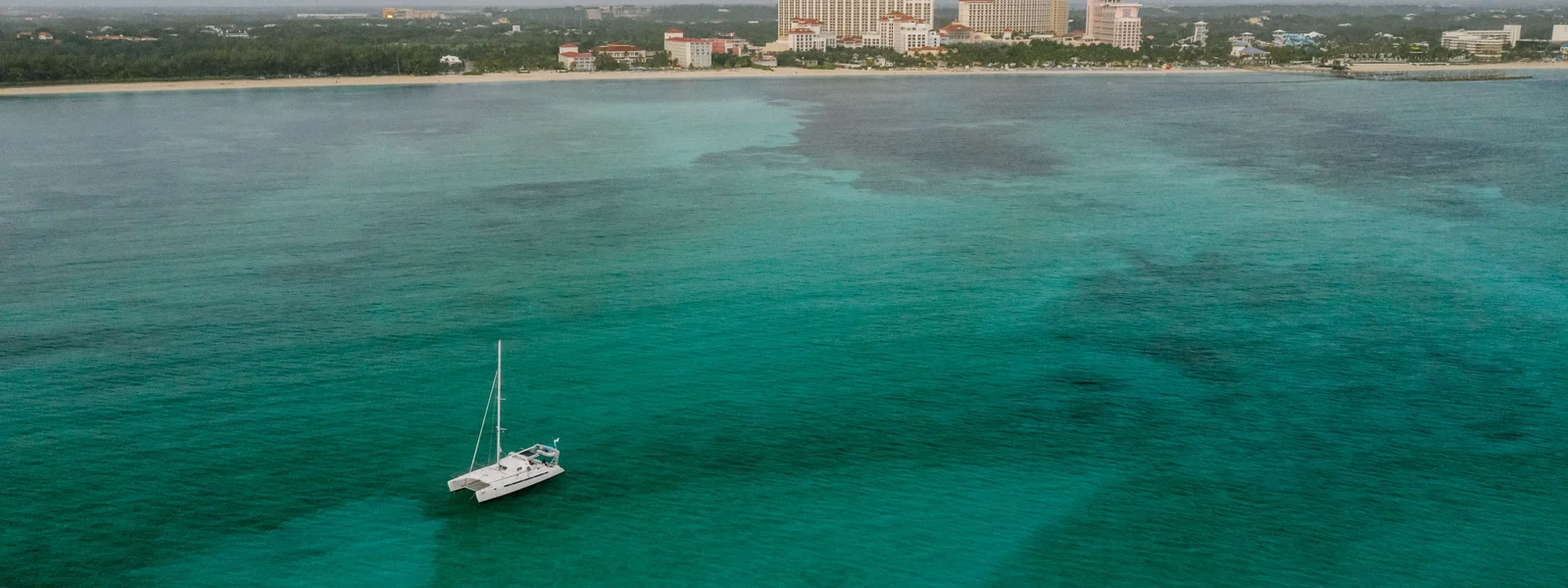
Bahamas 4G Coverage Map 2026
Bahamas has good 4G coverage across Nassau, Paradise Island and Grand Bahama, delivered by BTC and Aliv, with predictable gaps in the Out Islands and Family Islands, and offshore boat trips. The Bahamas is an archipelago of hundreds of islands, with the bulk of the population and infrastructure on New Providence (Nassau) and Grand Bahama. The US dollar is accepted island-wide at par with the Bahamian dollar. This guide maps what to actually expect region by region, so you plan your offline stretches rather than discovering them.
Bahamas's coverage is good in the main tourist areas. The gaps are predictable and easy to plan around once you know where they are.
The national picture in 2026
Bahamas runs on two main networks: BTC and Aliv. BTC is the dominant Caribbean operator with the broader reach, while Aliv competes strongly in the main populated areas. Both deliver solid 4G across Nassau, Paradise Island and Grand Bahama and the main towns. 4G is the practical standard and handles everything a traveler does, including video calls and streaming. A travel eSIM rides on one of these networks or switches between them.
The meaningful coverage question in Bahamas is the divide between the well-served main areas and the patchier the Out Islands and Family Islands, and offshore boat trips. For most tourist itineraries, which concentrate on Nassau, Paradise Island and Grand Bahama, coverage is reliable. The thinner areas are relevant mainly if your trip ventures into them.
Coverage by region
| Region | Typical service | What to expect |
|---|---|---|
| Nassau & New Providence | 4G | Good across the capital island and Paradise Island resorts. |
| Paradise Island (Atlantis) | 4G | Strong in the resort hub. |
| Grand Bahama (Freeport) | 4G | Good in the second main island. |
| Exuma | 4G in towns, variable | Coverage in George Town; patchier across the cays. |
| Eleuthera & Harbour Island | 4G in main areas | Good in the main spots; patchier on the quieter stretches. |
| Remote Out Islands | Variable to patchy | The Family Islands vary; some quiet cays are patchy. |
| Offshore boat trips | Patchy to none | Coverage fades offshore on boat excursions. |
For trips beyond the main tourist areas, BTC's wider network is a genuine advantage over Aliv. As the dominant operator, BTC reaches more of the smaller towns and quieter areas. For a traveler venturing beyond Nassau, Paradise Island and Grand Bahama, a BTC-based or multi-network eSIM is the safer choice. In the main areas both networks perform well and the difference is minor.
The offshore and remote reality
One consistent gap across Bahamas is offshore and in the most remote areas. Boat trips, the quieter islands and the deep interior have patchy to no coverage. This is normal for the region and easy to plan around: confirm logistics from a covered area before heading offshore or into the remote spots, download offline maps, and treat those stretches as a chance to disconnect. No network reaches these areas, so the answer is preparation rather than a better plan.
How to check coverage for your specific route
Operator coverage maps are a useful relative guide, and for Bahamas they confirm the general pattern of good main-area coverage with remote gaps. For a stay in or near the Out Islands and Family Islands, and offshore boat trips, ask your accommodation directly about signal and wifi, since they will tell you honestly what to expect on the ground. Before any excursion into the remoter areas, download the offline map as a precaution, because you may have no signal at the destination or on the way there. The combination of a BTC-based or multi-network plan and downloaded offline maps covers both the in-between zones and the genuine dead spots.
What this means for your plan
For most Bahamas trips covering Nassau, Paradise Island and Grand Bahama, coverage is good and any reputable eSIM serves you well, with a BTC-based or multi-network plan giving the best odds for any excursions beyond the main areas. For the the Out Islands and Family Islands, and offshore boat trips, plan for offline stretches with downloaded maps and confirmed logistics. The eSIM determines how easily you connect where coverage exists, which in Bahamas is most places visitors go.
Plans for Bahamas
Bahamas eSIM plans
Prices in USD. Instant QR activation. Pick your data, land connected.
FAQ
Which network has the best coverage in Bahamas?
BTC has the broader reach in Bahamas, making it the stronger choice for trips beyond the main tourist areas. Aliv competes well in the main populated areas. Both deliver good 4G across Nassau, Paradise Island and Grand Bahama. For the broadest coverage, a BTC-based or multi-network eSIM is the safer default, especially for any excursions into the quieter areas.
Where will I lose signal in Bahamas?
The main gaps are the Out Islands and Family Islands, and offshore boat trips. The main towns and tourist areas of Nassau, Paradise Island and Grand Bahama are well covered with 4G. Coverage thins offshore on boat trips and in the most remote interior areas. Download offline maps before heading to the quieter spots and confirm logistics from covered areas first.
Is there 5G in Bahamas?
Not widely yet. Bahamas runs primarily on 4G, which comfortably handles maps, calls, streaming and tethering everywhere it is covered. The meaningful coverage question is whether there is any signal in the remoter areas you plan to visit, not which network generation, so a solid 4G plan is what the island calls for.
Is coverage good enough for a typical Bahamas trip?
Yes. For most tourist itineraries covering Nassau, Paradise Island and Grand Bahama, coverage is good and reliable, reflecting the island's tourism infrastructure. The gaps in the Out Islands and Family Islands, and offshore boat trips are the exception rather than the rule, predictable, and easy to plan around with offline maps and a multi-network eSIM.
Do BTC and Aliv cover the same areas in Bahamas?
Broadly similar in the main areas, where both perform well. The difference emerges in the quieter and more remote areas, where BTC's wider network often has a tower where Aliv is weaker. A multi-network eSIM handles this by connecting to whichever has the strongest signal where you are.