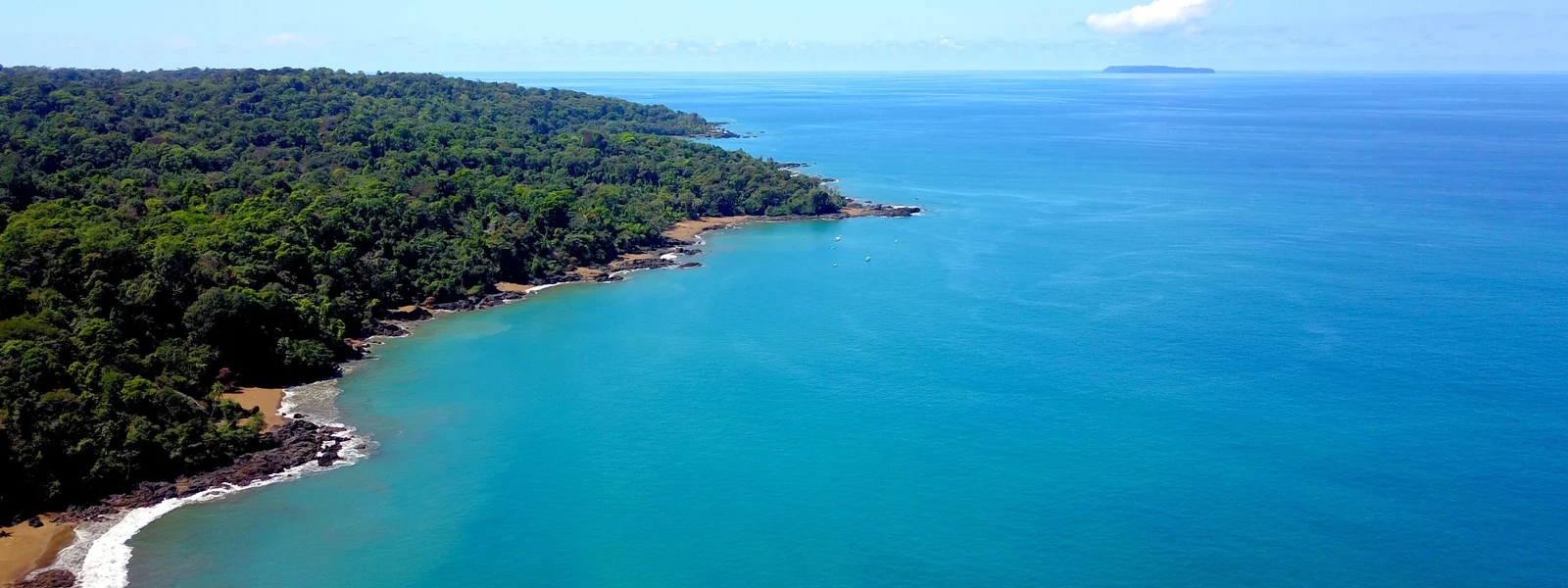
Both Coasts Beach Data Guide
Costa Rica's two coasts offer different beach experiences and slightly different connectivity. The Pacific side, from Guanacaste down to the southern zone, has the bigger surf towns and generally good coverage in the hubs; the Caribbean side around Puerto Viejo is more laid-back with more variable signal. In both, the towns are connected and the remote beaches are not. This guide maps coverage across both coasts so you know where to expect signal and how much data a beach trip really needs.
On both Costa Rican coasts, the rule is simple: the surf town has signal, the secret beach down the dirt road does not. Plan your connected time around the towns.
The two coasts at a glance
Costa Rica's Pacific coast is the more developed for tourism, with established surf and beach towns running from the Guanacaste hubs in the north through the central Pacific to the southern zone. Coverage in these towns is generally good 4G via Kölbi and Claro. The Caribbean coast, centered on Puerto Viejo and Cahuita, is smaller, more laid-back and more variable in signal. On both coasts, the developed towns are well connected and the remote beaches reached by dirt roads are where signal drops.
| Area | Coverage | What to expect |
|---|---|---|
| Tamarindo & Guanacaste hubs | 4G, some 5G | Good across the main towns and beaches. Strong tourist infrastructure. |
| Nosara & Santa Teresa | 4G, variable | Workable in the towns; thins on the surrounding beaches and dirt roads. |
| Jaco & Manuel Antonio | 4G | Good in the towns and around the national park entrance. |
| Puerto Viejo (Caribbean) | 4G in town, variable | Signal in town; thins on the beaches toward Manzanillo and the remote stretches. |
| Remote beaches & dirt roads | Patchy to none | The secret beaches down rough roads frequently have no signal. Plan offline. |
| Southern Pacific zone | 4G in towns, gaps around | Signal in the towns; thins toward the remote Osa region and back beaches. |
The Pacific coast generally has better and more consistent coverage because it is more developed for tourism, with bigger towns and more infrastructure. The Caribbean side around Puerto Viejo is more variable, in keeping with its quieter, less commercial character. Neither is a problem for a beach trip if you plan your connected tasks around the towns, but if reliable signal matters to you, the Pacific hubs are the safer bet.
How much data for a beach trip
A Costa Rican beach trip is a light data trip. You navigate to beaches and restaurants, message your group, book the occasional surf lesson or tour, post photos, and use hotel or rental wifi in the evenings. That pattern sits comfortably in the 3 to 5 GB range for a week. If you are posting heavily, video-calling home daily, or staying two weeks, step up to around 8 to 10 GB.
Staying connected at the beach
- Download offline maps for the dirt roads. The best beaches are often down unmarked rough roads with no signal; offline navigation gets you there and back.
- Confirm surf lessons and tours from town. Message operators while you have signal, since the beach itself may be a dead zone.
- Use accommodation wifi for uploads. Back up your beach and surf photos on wifi in the evening rather than over your plan.
- Protect your phone from the elements. Sand, salt water and heat are the real threats at the beach; a waterproof pouch matters more than signal strength.
The most beautiful Costa Rican beaches are often the least connected, down dirt roads with no signal. Download the offline map, screenshot directions, tell someone where you are going, and do not rely on being reachable once you leave the town. The gap between a connected surf town and an off-grid beach can be just a few minutes down a rough road.
Which network for the coasts
For both coasts, a Kölbi-based or multi-network eSIM is the safest choice, with the broadest reach including the marginal areas around the remote beaches. Kölbi tends to have the widest coverage, while Claro is also strong in the Pacific tourist hubs. For a trip that stays in the main surf towns, any network works; for one that ventures to remote beaches and dirt-road spots, a Kölbi-based or multi-network plan gives the best odds of a signal.
Where we land
For a Costa Rican beach week, a 5 GB Kölbi-based eSIM covers a relaxed trip with room to spare, stepping up to 10 GB for two weeks or heavy posting. The Pacific hubs are better connected than the Caribbean side, and the remote beaches on both coasts are dead zones to plan around with offline maps. Our Costa Rica plans ride the strongest available network across both coasts, with top-up if a heavy posting week runs you short.
Plans for Costa Rica
Costa Rica eSIM plans
Prices in USD. Instant QR activation. Pick your data, land connected.
FAQ
Is there good mobile coverage on Costa Rica's beaches?
Coverage is generally good in the developed beach and surf towns on both coasts, with 4G via Kölbi and Claro. The Pacific hubs like Tamarindo, Jaco and Manuel Antonio are the best connected; the Caribbean side around Puerto Viejo is more variable. The remote beaches reached by dirt roads on both coasts frequently have no signal, so plan your connected tasks around the towns.
How much data do I need for a beach week in Costa Rica?
A relaxed beach week with evening accommodation wifi sits comfortably in the 3 to 5 GB range, covering maps, messaging, social media and the occasional surf lesson or tour booking. If you post heavily, video-call home daily, or stay two weeks, step up to around 8 to 10 GB. Buying 5 GB gives most beach travelers headroom.
Is the Pacific or Caribbean coast better connected in Costa Rica?
The Pacific coast generally has better and more consistent coverage, because it is more developed for tourism with bigger towns and more infrastructure. The Caribbean side around Puerto Viejo is more variable, in keeping with its quieter character. Neither is a problem if you plan connected tasks around the towns, but the Pacific hubs are the safer bet if reliable signal matters to you.
Will my eSIM work at remote Costa Rican beaches?
Often not. The most beautiful beaches are frequently down unmarked dirt roads with no signal, even just minutes from a connected surf town. Before heading to a remote beach, download the offline map, screenshot directions, and do not rely on being reachable once you leave the town. Plan it as offline time, which suits a remote beach anyway.
Which network is best for a Costa Rica beach trip?
A Kölbi-based or multi-network eSIM is the safest choice, with the broadest reach including the marginal areas around remote beaches. Kölbi tends to have the widest coverage, while Claro is also strong in the Pacific tourist hubs. For a trip staying in the main surf towns any network works; for remote beaches and dirt-road spots, a Kölbi-based or multi-network plan gives the best odds of a signal.