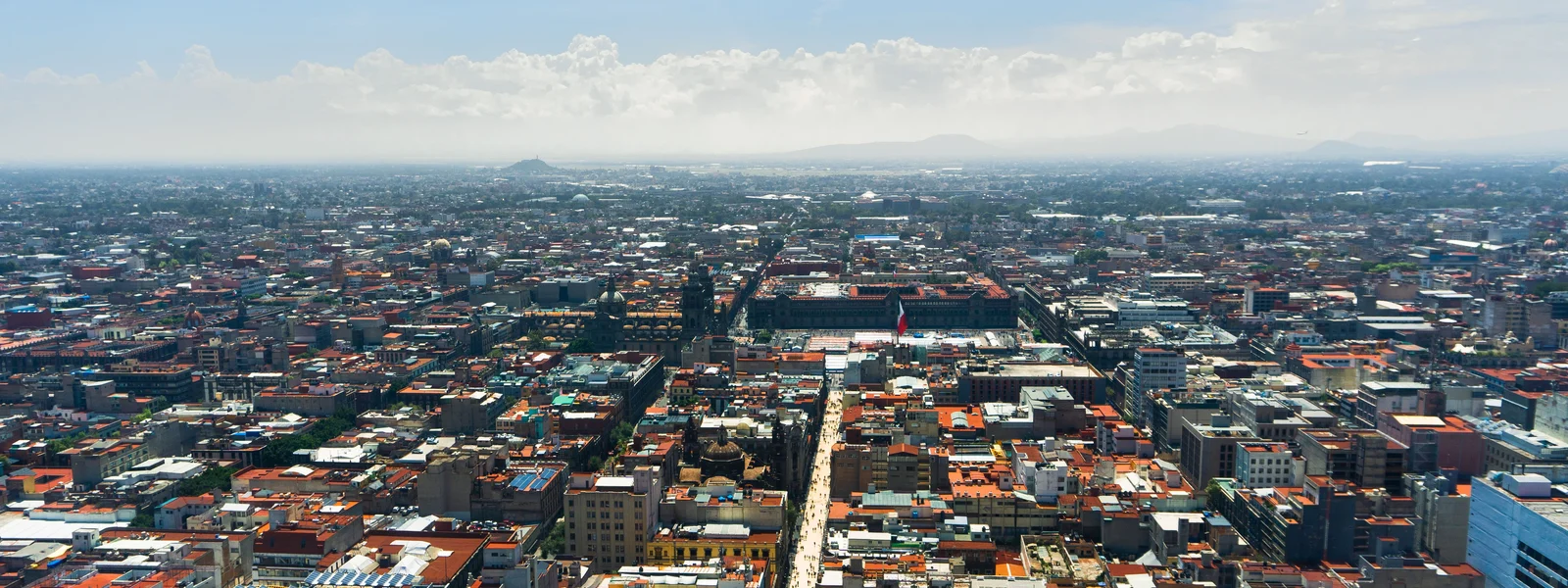
Mexico 5G & 4G Coverage Map 2026
Mexico has better mobile coverage than most travelers expect and worse than the operators' marketing maps suggest. The truth sits in between, and it is highly regional. In Mexico City, Monterrey and the Cancun tourist strip you are on dense 5G; on a desert stretch of Baja or a mountain road in Oaxaca you can lose signal for an hour. This guide maps what to actually expect, region by region, so you plan your offline stretches instead of discovering them.
Coverage maps published by operators show where a signal is theoretically possible, not where it is usable at speed. This guide is about the second one.
The national picture in 2026
Mexico runs three mobile networks that matter to a traveler. Telcel, owned by America Movil, is the dominant carrier with by far the widest geographic footprint and the deepest rural reach. AT&T Mexico is a strong second, well built across the cities and the main highway corridors. Movistar, now largely operating over AT&T infrastructure through a network-sharing arrangement, rounds out the value end. A travel eSIM for Mexico typically rides on Telcel or AT&T, and which one it uses matters most the moment you leave a major city.
5G is genuinely live and expanding in the big metros and the primary tourist destinations. For everything a normal visitor does, the practical floor is 4G, which across covered Mexico delivers comfortably fast speeds for maps, calls, streaming and tethering. The places where coverage genuinely fails are specific and predictable, and they are the whole reason this article exists.
Coverage by region
This is the detailed version of the quick-reference table in the main guide. Read it as a planning tool: the strong rows you can ignore, the weak rows you plan around.
| Region | Best network | Typical service | What to expect |
|---|---|---|---|
| Mexico City & State of Mexico | Telcel / AT&T | 5G dense | Excellent across the city, the main avenues and most of the Metro. Congestion only in the busiest plazas at peak hours. |
| Cancun, Playa del Carmen, Tulum | Telcel | 5G in towns, 4G out | Strong in all three town centers and the hotel zones. Thins on remote beaches, jungle cenotes and the road south of Tulum. |
| Guadalajara & Monterrey | Telcel / AT&T | 5G dense | Fast and reliable across both metros and their suburbs. No real planning needed. |
| Puerto Vallarta & Los Cabos | Telcel | 5G in town, 4G on the coast | Good in the resort areas; weaker on remote beaches and the back roads of the sierra behind them. |
| Oaxaca & Chiapas | Telcel | 4G in towns, patchy around | Reliable in Oaxaca city and San Cristobal; expect dead zones in the sierra, on mountain roads and in small villages. |
| Baja California peninsula | Telcel | 4G on the highway, gaps inland | Solid in towns and along the Transpeninsular highway; long desert dead zones in between. |
| Copper Canyon & remote sierra | Telcel (where any) | None to weak | Treat as offline. The train route in particular has long stretches with no signal at all. |
| Yucatan interior & Campeche | Telcel | 4G in towns | Merida and the main ruins are well covered; smaller pueblos and the road to remote cenotes can drop. |
Telcel has spent decades building towers in places no competitor found commercially worthwhile, which is why it covers small towns, secondary highways and rural stretches that AT&T and Movistar simply do not reach. In a city it makes little practical difference which network your eSIM uses. The further you go from a metro, the more a Telcel-based plan pulls ahead. If your itinerary is heavy on rural Oaxaca, Chiapas, Baja or the sierra, that is the network to prioritize.
5G in Mexico: real, but not the deciding factor
5G coverage is concentrated in Mexico City, Monterrey, Guadalajara, Cancun, Puebla and a growing list of urban centers. Where it is present it is genuinely fast, but it is rarely the thing that decides a good trip. The reason is simple: 4G in covered Mexico already delivers more than enough speed for everything a traveler does, including video calls and streaming. Paying a premium specifically for a 5G plan makes little sense when most of your data, outside the metros, will pass through 4G anyway and that 4G is perfectly fast.
- Baja desert stretches. Between towns on the Transpeninsular highway you can drive an hour with no usable signal. Download maps offline before you set out.
- The Copper Canyon railway. Long sections of the Chihuahua al Pacifico route have no coverage at all. Treat the journey as disconnected time.
- Oaxacan and Chiapas sierra. Mountain roads between villages frequently drop. Save your route and any tickets before you leave the last town.
- Remote cenotes and jungle beaches. The famous ones near towns are fine; the off-grid ones south of Tulum or deep in the Yucatan interior are not.
How to check coverage for your specific route
Operator coverage maps are optimistic but useful as a relative guide. The more reliable method is to look up the specific towns on your itinerary rather than trusting a national average. A practical habit: before any drive that leaves a metro area, download the offline map for that region and screenshot any reservation or ticket you will need. Coverage is excellent often enough that the rare dead zone catches people off guard precisely because they stopped expecting it.
What this means for your plan
For a trip centered on Mexico City, Cancun, the Riviera Maya, Guadalajara or any combination of metros and major resorts, coverage is a non-issue and any reputable eSIM will serve you well. For an itinerary that goes deep into Baja, the Copper Canyon, rural Oaxaca or Chiapas, prioritize a Telcel-based plan and plan your offline stretches deliberately. The eSIM does not change what the network can reach; it only determines how easily you connect to it.
Plans for Mexico
Mexico eSIM plans
Prices in USD. Instant QR activation. Pick your data, land connected.
FAQ
Which network has the best coverage in Mexico?
Telcel has the widest coverage in Mexico by a clear margin, especially outside the major cities. It reaches small towns, secondary highways and rural regions that AT&T and Movistar do not. In a metro area the difference is negligible, but for rural Oaxaca, Chiapas, Baja or the sierra, a Telcel-based eSIM is the safer choice.
Is 5G widely available in Mexico in 2026?
5G is widely deployed in Mexico City, Monterrey, Guadalajara, Cancun, Puebla and other major urban centers, and it continues to expand. Outside those areas the standard is 4G, which is fast enough for maps, calls, streaming and tethering. For most travelers, 5G availability is not the factor that decides plan quality.
Where in Mexico will I lose mobile signal?
The genuine dead zones are predictable: desert stretches of the Baja Transpeninsular highway between towns, long sections of the Copper Canyon railway, mountain roads in the Oaxacan and Chiapas sierra, and remote off-grid cenotes and beaches. Cities, major resorts and main highways are well covered. Download offline maps before any drive that leaves a metro area.
Does an eSIM get better coverage than a local SIM?
No. An eSIM connects to the same physical networks as a local SIM, so coverage is identical for the network it uses. What matters is which operator your plan rides on. A Telcel-based eSIM and a Telcel local SIM have the same reach. The eSIM only changes how you connect, not what the towers cover.
Is 4G fast enough for video calls in Mexico?
Yes, comfortably, anywhere 4G is well covered, which is most of the country a traveler reaches. Mexican 4G typically delivers speeds that handle video calls, streaming and tethering without trouble. The limiting factor is coverage, not the generation of the network, which is why this guide focuses on where signal exists rather than on 4G versus 5G.