Peru 4G & 5G Coverage Map 2026
Peru has good 4G coverage across Lima, Cusco, Arequipa and the main cities, delivered by Claro, Movistar, Entel and Bitel, with predictable gaps shaped by its dramatic geography: the high Andes and trekking routes, the Inca Trail to Machu Picchu, and the remote Amazon basin. 5G is now appearing in the major cities, particularly Lima. This guide maps what to actually expect region by region, so you plan your offline stretches rather than discovering them.
Peru's coverage is good in the cities and main areas. The gaps follow the geography, the mountains and remote regions, and are predictable once you know them.
The national picture in 2026
Peru runs on 4 mobile networks: Claro, Movistar, Entel and Bitel. Claro is generally considered to have among the widest reach, with strong presence in many areas. All deliver good 4G in Lima, Cusco, Arequipa and the main cities, and 5G is now appearing in the major cities, particularly Lima. 4G is the practical standard across covered Peru and handles everything a traveler does, including video calls and streaming. A travel eSIM rides on one of these networks or switches between them.
The meaningful coverage question in Peru is shaped by the country's geography. The cities and main towns have good coverage, but the high Andes and trekking routes, the Inca Trail to Machu Picchu, and the remote Amazon basin create predictable gaps. For a traveler, the practical map is: well connected in the cities and on the main tourist circuit, increasingly offline as you head into the mountains, the remote regions or the jungle.
Coverage by region
| Region | Typical service | What to expect |
|---|---|---|
| Lima | 4G / some 5G | Strong across the coastal capital. |
| Cusco | 4G | Good in the Inca capital and tourist hub. |
| Sacred Valley | 4G in towns, variable | Coverage in the towns; patchier on rural roads. |
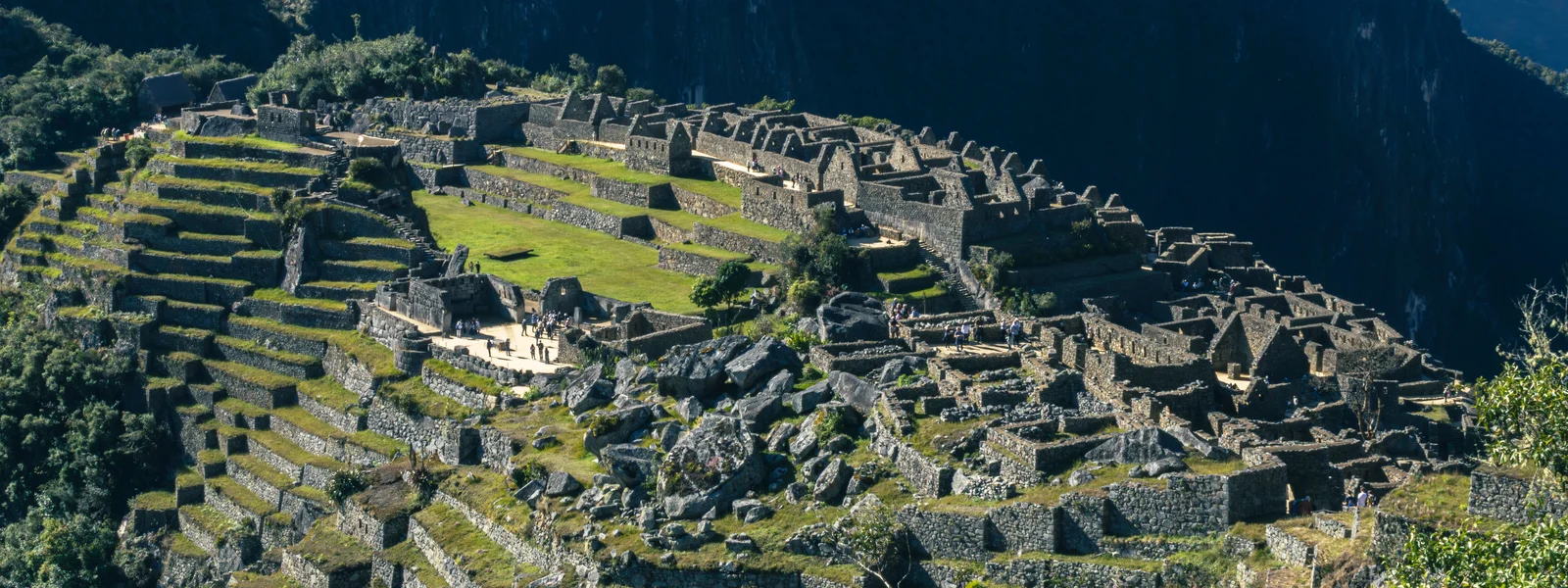
| Machu Picchu & Aguas Calientes | 4G in town, patchy at site | Aguas Calientes has signal; the ruins and trail patchy. |
| Arequipa | 4G | Good in the colonial city. |
| Lake Titicaca (Puno) | 4G in town, variable on lake | Puno covered; the lake islands patchier. |
| Inca Trail & high Andes | Patchy to none | The trekking routes are largely offline. |
| Amazon (Iquitos, Puerto Maldonado) | 4G in towns, none in jungle | Towns covered; the jungle and river offline. |
For trips beyond the main cities, Claro's wide network is a genuine advantage. As one of the larger operators, Claro reaches more of the smaller towns and rural areas than some competitors, though even Claro thins out in the most remote mountain and jungle areas. For a traveler venturing beyond Lima, Cusco, Arequipa and the main cities, a Claro-based or multi-network eSIM is the safer choice. In the cities all networks perform well and the difference is minor.
The geography that shapes coverage
Peru's terrain is the key to understanding its coverage. Mobile signal does not travel well through mountains, and Peru's dramatic topography means signal can drop sharply between covered areas. The remote regions, the jungle and the high trekking routes are too sparsely populated for dense tower coverage. This means coverage is patchier than population figures alone would suggest, and journeys through the mountains and to the remote areas cross more dead zones than you might expect. Download offline maps for any such travel.
Some parts of Peru are genuinely offline, not just patchy. The Amazon jungle and river beyond the gateway towns have essentially no mobile coverage, and the high trekking routes lose signal entirely. No eSIM or local SIM changes this; the areas are too remote for towers. Plan these stretches as completely disconnected: confirm logistics from the nearest covered town, download what you need, and accept the off-grid time as part of the experience.
How to check coverage for your specific route
Operator coverage maps are a useful relative guide, and for Peru they confirm the pattern of good city coverage with mountain and remote-region gaps. For a stay in a smaller town or a trek, ask your accommodation or tour operator directly about signal, since they will know the local reality. Before any trekking, mountain or remote-region travel, download offline maps and plan as though you will lose signal. The combination of a Claro-based or multi-network plan and downloaded offline maps covers both the in-between zones and the genuine dead zones.
What this means for your plan
For most Peru trips covering Lima, Cusco, Arequipa and the main cities and the main circuit, coverage is good and any reputable eSIM serves you well, with a Claro-based or multi-network plan giving the best odds for excursions beyond the cities. For the high Andes and trekking routes, the Inca Trail to Machu Picchu, and the remote Amazon basin, plan for offline stretches with downloaded maps and confirmed logistics. The eSIM determines how easily you connect where coverage exists, which in Peru is most places visitors go on the main circuit.
Plans for Peru
Peru eSIM plans
Prices in USD. Instant QR activation. Pick your data, land connected.
FAQ
Which network has the best coverage in Peru?
Claro is generally considered to have among the widest reach in Peru, making it a strong choice for trips beyond the cities. Movistar and the others are also competitive, particularly in the urban areas. For the broadest coverage, especially in the mountains and rural areas, a Claro-based or multi-network eSIM is the safer default. No network fully covers the most remote regions.
Where will I lose signal in Peru?
The main gaps are the high Andes and trekking routes, the Inca Trail to Machu Picchu, and the remote Amazon basin. The cities and main towns are well covered. Peru's mountainous terrain means signal also drops on the roads between cities. Download offline maps before any trekking, mountain or remote-region travel, since GPS works without a mobile signal.
Is there 5G in Peru?
Yes, 5G is now appearing in the major cities, with rollout ongoing. The country's good 4G already handles everything a traveler does, so 5G is a welcome bonus in the cities rather than a necessity. The meaningful coverage question is the mountain and remote-region gaps, not the network generation.
Why is coverage in Peru patchier than expected?
Peru's dramatic mountainous terrain means mobile signal does not travel well, dropping sharply between covered areas. The remote regions and high trekking routes are too sparsely populated for dense tower coverage. This makes coverage patchier than population figures suggest, and mountain and remote journeys cross more dead zones than expected, which is why offline maps matter.
Is Peru's coverage good enough for a typical tourist trip?
Yes, for the main circuit. For itineraries covering Lima, Cusco, Arequipa and the main cities and the popular sights, coverage is good and a travel eSIM serves you reliably. The significant gaps are the trekking routes, remote regions and jungle, which are part of the adventure and where the offline nature is often welcome. Plan those stretches with downloaded maps.