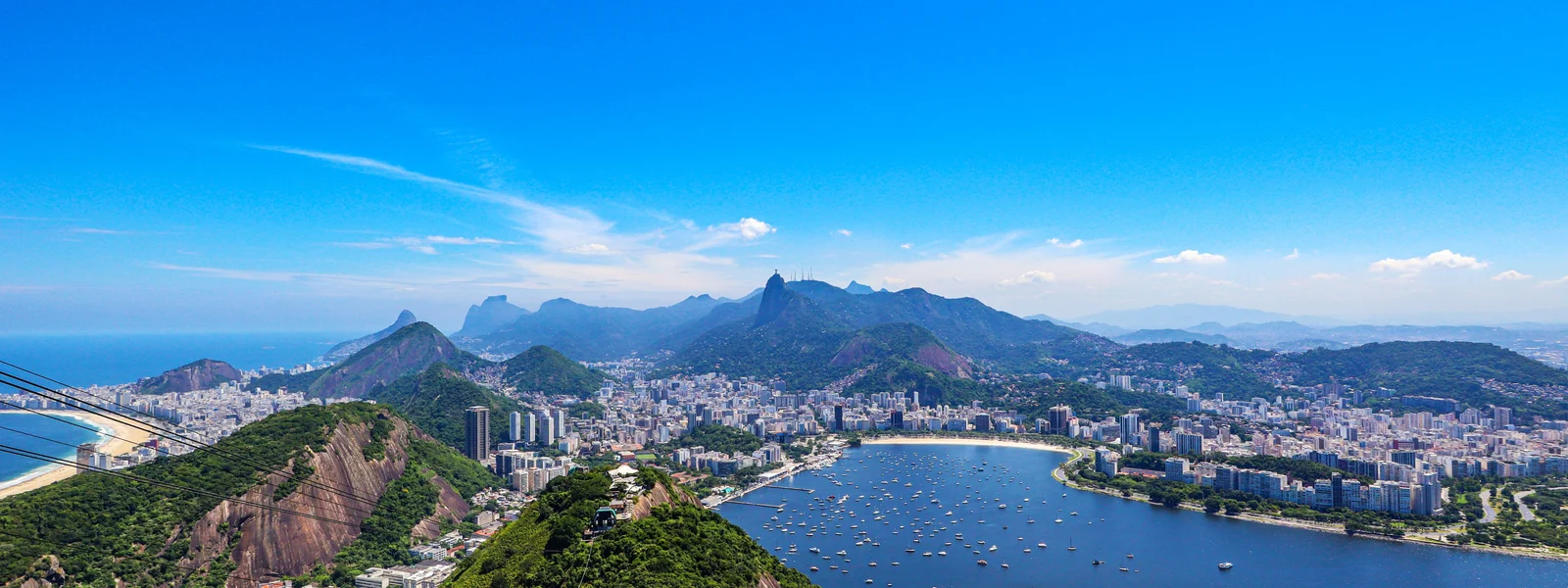
Digital Nomad: One Month in Brazil
Brazil has become one of South America's major remote-work destinations, with a digital nomad visa, vibrant city scenes, and bases ranging from the business energy of São Paulo to the beaches of Florianópolis and Rio. The connectivity for a working month is excellent in the cities: fast 5G, strong fiber and plenty of coworking. The main thing to manage is choosing a well-connected base and building a mobile backup. This guide covers data needs, base selection, and the redundancy that keeps your calls connected.
Brazil's cities are genuinely strong for remote work: 5G, fiber and coworking. The connectivity is among the best in South America. The main decision is which city, not whether it will work.
The main nomad bases and what to expect
Brazil offers several established remote-work bases, all with good to excellent connectivity. Knowing the local character helps you choose between them.
| Base | Connectivity reality | Best for |
|---|---|---|
| São Paulo | Excellent. Fast 5G, fiber, the most coworking. | Maximum reliability, business networking, city life. |
| Rio de Janeiro | Excellent. 5G and fiber, beach-city lifestyle. | The iconic Brazil experience with strong connectivity. |
| Florianópolis | Very good. The island nomad hub. | Beach-and-work balance, a big nomad community. |
| Belo Horizonte | Good. A quieter, more affordable city. | Lower cost with solid urban connectivity. |
How much data a working month really takes
The honest number depends on how much of your heavy work runs over mobile data versus venue or apartment wifi. In any Brazilian city with good fiber, your eSIM mainly handles gaps, outages, commutes and weekend trips, and 20 GB can suffice. If you tether your laptop regularly or your apartment wifi is unreliable, daily video calls and uploads push you toward 30 to 40 GB or more. Brazil's strong urban networks make tethering a viable primary connection in a way that is not true everywhere.
For a remote worker, the single most important plan feature after coverage is whether tethering is allowed. Some plans restrict it. In Brazilian cities the strong 5G makes tethering a genuinely good backup or even primary connection, so confirm the plan permits it and choose one with enough data to back a laptop. A Vivo-based or multi-network plan gives the most reliable tethering across the city and on weekend trips.
The redundancy setup that protects your calls
The difference between a tourist and a working nomad is that you cannot afford a single point of failure. Brazil's strong city infrastructure makes this easier than in much of the region, but the robust setup still layers three sources of connectivity.
Your main connection for the working day. Brazilian cities have good fiber; test it before committing and ask the host for a speed test screenshot.
When the wifi drops mid-call, switch to your phone's hotspot on a Vivo-based or multi-network eSIM. Brazil's 5G makes this a fast, reliable backup.
For mission-critical work, a second eSIM on a different operator means even an issue on one network does not take you fully offline.
Time zones and the Americas advantage
Brazil spans a few time zones, with the main cities (São Paulo, Rio, Florianópolis) in Brasília time, which overlaps well with the US East Coast for part of the day and aligns reasonably with the rest of the Americas. For someone working with North or South American clients, the hours are workable without living nocturnally. For European teams, the offset is moderate, with a good afternoon overlap. For Asian teams, the gap is large and requires planning. Factor your team's hours into the choice alongside the connectivity, which in Brazil's cities is rarely the limiting factor.
Practical tips for a working month
- Choose São Paulo or Rio for maximum reliability, or Florianópolis for the beach-and-work nomad community.
- Choose a Vivo-based or multi-network eSIM for the broadest coverage, especially if you take weekend trips into the interior.
- Buy a plan with top-up so you can extend data mid-month without a new purchase.
- Consider the digital nomad visa if staying long-term, which also makes obtaining a CPF and a local SIM straightforward for the longer term.
- Keep your home line active for two-factor codes and bank messages, with its data roaming off, while the eSIM carries your data.
Where we land
For a working month in Brazil, size your eSIM to your base and habits: 20 GB in a city with good fiber, 30 to 40 GB if you tether often or use mobile as a primary connection, always with tethering confirmed and top-up available. Build the redundancy, made easier by Brazil's strong city networks and 5G. Our Brazil plans suit the nomad case well: generous data tiers, top-up in seconds, and the strongest available network for the days the fiber lets you down or you head out of the city.
Plans for Brazil
Brazil eSIM plans
Prices in USD. Instant QR activation. Pick your data, land connected.
FAQ
How much data do I need to work remotely from Brazil for a month?
It depends on your base and how much heavy work runs over mobile data versus fiber. In a Brazilian city with good apartment or coworking fiber, 20 GB covers gaps and backup. With daily tethering and regular mobile video calls, plan for 30 GB. With mobile as a primary connection, 40 GB or more. Brazil's strong 5G makes tethering viable, so confirm the plan allows it.
Is Brazil good for digital nomads in 2026?
Yes, it is one of South America's major remote-work destinations. The cities offer excellent connectivity with fast 5G, strong fiber and plenty of coworking, plus a digital nomad visa. Bases range from São Paulo's business energy to the beaches of Florianópolis and Rio. The connectivity is among the best in the region, so the main decision is which city, not whether it will work.
Which Brazil city is best for remote work?
São Paulo has the best infrastructure with fast 5G, fiber and the most coworking. Rio offers the iconic beach-city lifestyle with strong connectivity. Florianópolis is the island nomad hub with a big community and beach-and-work balance. Belo Horizonte is a quieter, more affordable option with solid connectivity. All have good to excellent connectivity for remote work.
Does Brazil's time zone work for US clients?
Reasonably well. The main cities are in Brasília time, which overlaps with the US East Coast for part of the working day and aligns reasonably with the rest of the Americas. For North or South American clients the hours are workable without living nocturnally. For European teams the offset is moderate with a good afternoon overlap; for Asian teams the gap is large and needs planning.
Can I tether my laptop on a Brazil eSIM?
On most reputable plans yes, but some restrict tethering, so confirm before buying. In Brazilian cities the strong 5G makes tethering a genuinely good backup or even a primary connection, so choose a plan that explicitly allows it with enough data to back a laptop. A Vivo-based or multi-network plan gives the most reliable tethering across the city and on weekend trips.