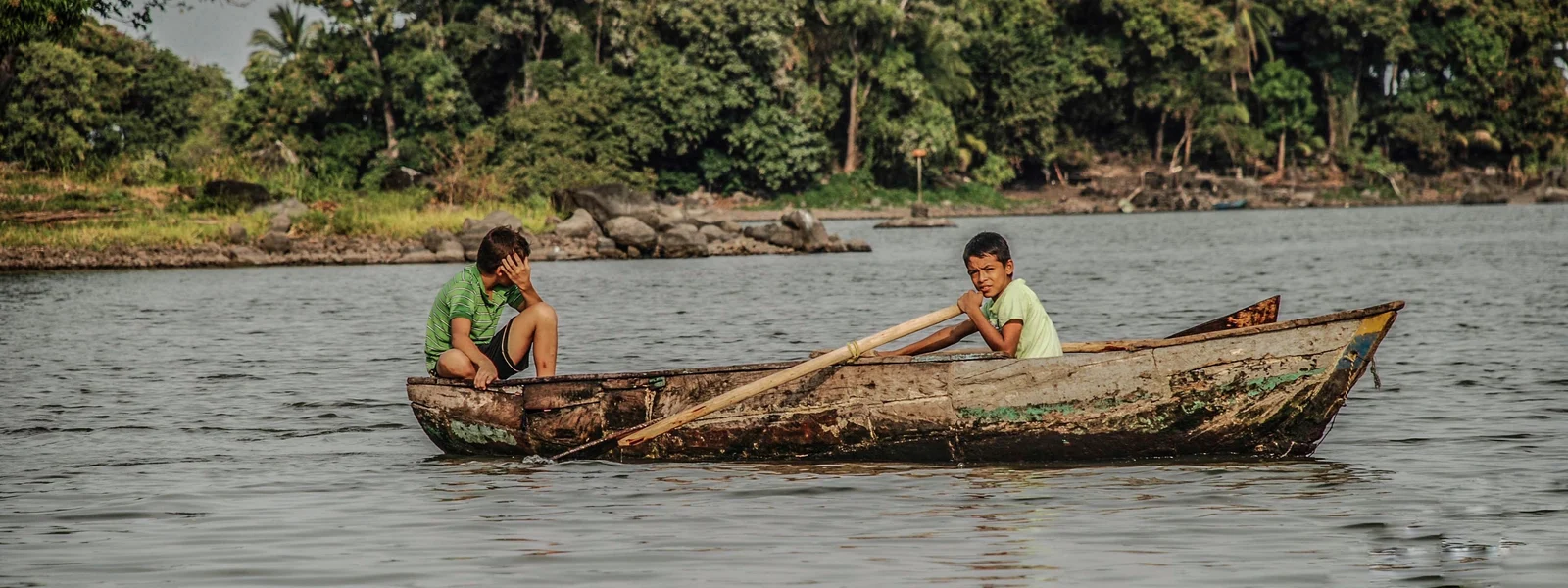
How Much Data Do You Need in Nicaragua?
Most travelers buy too much data for Nicaragua, sold on fear by a worst-case pitch. The reality is that maps, messaging and social media sip data, while only heavy video and laptop tethering drink it. There is also a Nicaragua twist: a trip with volcano climbs and surf time often uses less data than expected, because those activities are offline. This guide gives realistic numbers by trip type so you buy a plan that fits, with top-up rather than overpaying upfront.
The cheapest mistake is buying slightly too little and topping up once. The expensive mistake is buying a giant pack out of fear and finishing your trip with half of it unused, having spent days on volcanoes and in the surf anyway.
The honest daily numbers
Start from what apps actually consume. The activities that dominate a travel day, maps, messaging, browsing and social media, are remarkably light. The activities that burn data, streaming video and tethering a laptop, are the exception for most trips rather than the rule.
| Activity | Rough data use | Notes |
|---|---|---|
| Maps and navigation | Very low | Around 5 MB per hour of active navigation. Negligible over a trip. |
| Messaging (WhatsApp text) | Very low | Tiny, even with photos. Voice and video calls use more. |
| Social media browsing | Moderate | Roughly 100 to 200 MB per hour, more if it autoplays video. |
| Music streaming | Moderate | About 50 to 100 MB per hour at standard quality. |
| Video streaming | High | 1 to 3 GB per hour depending on resolution. The single biggest consumer. |
| Video calls | High | Around 0.5 to 1.5 GB per hour. Add up fast for remote workers. |
| Laptop tethering | Variable | Depends entirely on the work. Can dwarf phone usage. |
For normal travel use, plan on roughly 0.7 to 1 GB per day. That comfortably covers maps all day, constant messaging, regular social media and some music, with headroom. A Nicaragua trip with volcano climbs and surf time often comes in under this, because those activities are offline, so you spend stretches using little or no data.
Data by trip type
Match yourself to the closest profile rather than guessing. These ranges assume you use hostel and hotel wifi for the heaviest tasks, like backing up photos or streaming at night, which is the normal pattern.
Profiles in detail
The classic Nicaragua trip. A week or two taking in Granada, a volcano climb, Ometepe and San Juan del Sur. Counterintuitively, this uses little data, because the climbs, the surf and the quieter island parts are largely offline, with wifi in the evenings. 3 to 5 GB is often plenty.
The more connected explorer. Two to three weeks with more town time, daily posting, and video calls home. 5 to 10 GB fits well.
The Spanish student or surfer. A month based in Granada or San Juan del Sur for a Spanish course or surf season, with daily use mostly on accommodation and school wifi. 10 to 20 GB depending on mobile versus wifi use. Top-up matters here for a longer stay.
The remote worker. Living and working from Granada or San Juan del Sur for a month, with daily video calls, laptop tethering and uploads. This is the only profile that genuinely needs 20 to 40 GB or more. Confirm the plan allows tethering and offers top-up.
The smartest approach for most travelers is to buy for the lower end of your estimate and top up once if you need more. Topping up takes seconds and costs less, in money and waste, than buying a large pack on day one and finishing with gigabytes unused. This is especially true in Nicaragua, where so much of the trip is spent off-grid on volcanoes and in the surf.
What inflates usage without you noticing
- Autoplaying video in social feeds. Turn off autoplay on mobile data to cut social usage sharply.
- Automatic cloud photo backup over mobile data. With all the volcano and surf photos you will take, set backup to wifi-only.
- App and system updates. Restrict these to wifi so a large update does not consume a chunk of your plan.
- Streaming on mobile out of habit. Save movies for hostel or hotel wifi in the evening.
Where we land
For most Nicaragua trips, 5 GB is the right zone, often with room to spare given the off-grid volcano and surf time, with top-up as the pressure valve. Buy toward the lower end of your honest estimate, keep heavy tasks on wifi, and top up once if you run short. Only remote workers, students on long stays and heavy streamers should size up to 20 GB or more from the start. Our Nicaragua plans are sized across this range with top-up available, so you can start sensibly and add data only if your trip actually demands it.
Plans for Nicaragua
FAQ
How much data do I need for two weeks in Nicaragua?
For a typical two weeks of the classic circuit, with volcano climbs, Ometepe and surf, with evening wifi, 3 to 5 GB is comfortable for most travelers. The trip often uses less than expected because the climbs, the surf and the quieter island parts are largely offline. A more connected trip with daily posting and video calls runs nearer 5 to 10 GB.
Why does a Nicaragua trip use less data than expected?
Because so much of a classic Nicaragua itinerary happens in off-grid places, the volcano climbs, the surf time, and the quieter corners of Ometepe, where there is little or no signal and no data flows. You spend stretches disconnected by the nature of those activities, which keeps total usage low compared with a fully connected city trip.
How much data does a month in Nicaragua need?
For a month of regular travel, or a Spanish-course or surf-season stay with daily use, 10 to 20 GB is the right range depending on how much you do on mobile versus wifi. Remote workers doing daily video calls and laptop tethering need more, typically 20 to 40 GB or beyond, and should confirm the plan allows tethering. Keeping heavy tasks on accommodation and school wifi lowers the requirement.
Is it better to buy a big data plan or top up in Nicaragua?
For most travelers, buy toward the lower end of your estimate and top up once if needed. Topping up takes seconds and wastes less money than buying a large pack upfront and finishing the trip with gigabytes unused, which is especially likely in Nicaragua given how much time you spend off-grid on volcanoes and in the surf.
Does using Google Maps in Nicaragua use a lot of data?
No. Active turn-by-turn navigation uses only around 5 MB per hour, which is negligible over an entire trip. You can navigate all day on a small plan without concern. For the volcano approaches and rural drives where signal drops, downloading the offline map beforehand also guards against losing navigation where there is no signal.