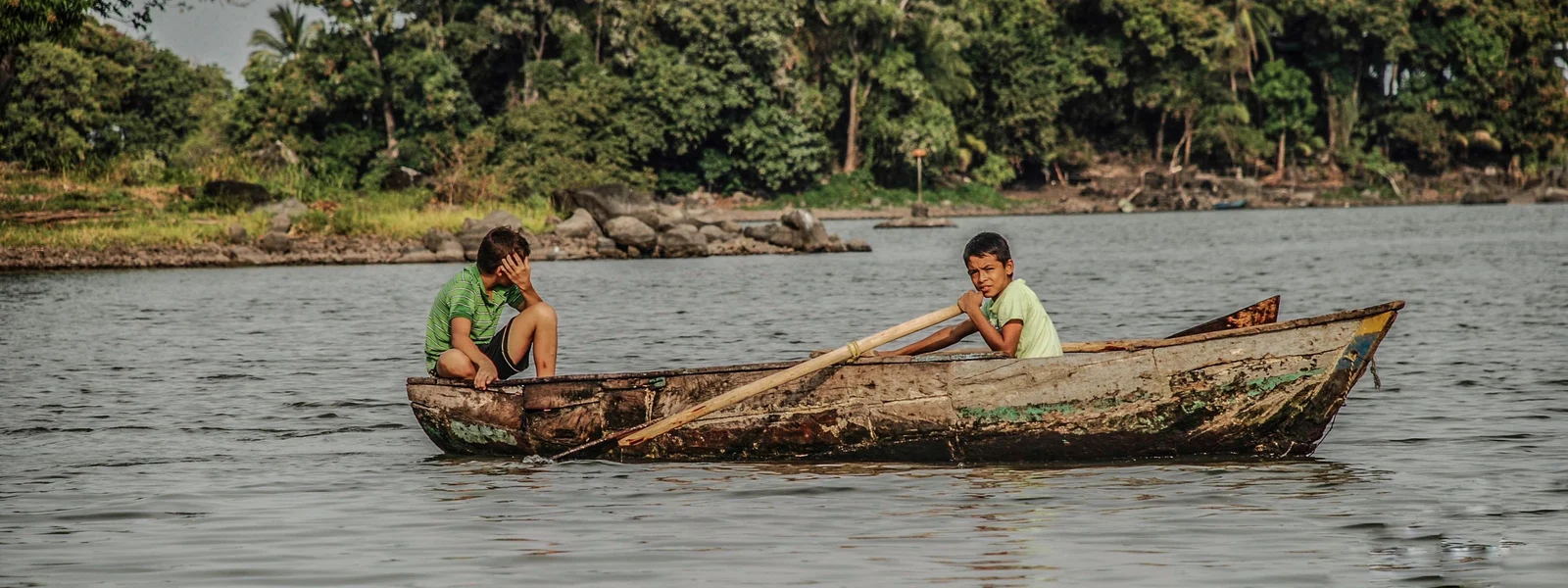
Nicaragua eSIM Guide 2026
Nicaragua is a land of lakes and volcanoes: the colonial city of Granada beside its great lake, the twin-volcano island of Ometepe, the surf town of San Juan del Sur, and a chain of volcanoes running down the country. Coverage is good in the cities and main towns, and an eSIM is live before you leave the airport. The things that catch visitors out are the volcano trails, the quieter corners of Ometepe, and the remoter Caribbean coast and rural roads. This hub is the whole map. It covers coverage region by region, realistic data budgets, the setup that never fails, and honest comparisons so you buy once and stop thinking about it.
We sell eSIMs, so read every recommendation here as exactly that, a recommendation from someone with skin in the game. Where a local SIM or your home roaming genuinely beats us for your trip, this guide says so plainly.
Nicaragua in one screen
Here is the short version before the detail. Nicaragua has good 4G mobile data across Managua, Granada, Leon and the main towns, delivered by two dominant networks: Claro and Tigo. 4G is the practical standard and handles everything a traveler does, with 5G only beginning to appear. The gaps are geographic: the volcano trails, the quieter parts of Ometepe island, the remote Caribbean coast, and rural mountain roads. For a trip to Granada, Ometepe, San Juan del Sur and the main sights, coverage is mostly reliable. For the volcano climbs and remote corners, you plan for the gaps. This hub maps it all.
Sort your data before you land, not at an airport kiosk and not by leaving your home carrier's international roaming on. Nicaragua sits outside most European and Asian roaming bundles, so day-fees are steep. A travel eSIM bought at home and switched on after landing skips the queue and the roaming bill entirely.
Coverage at a glance, region by region
Coverage in Nicaragua tracks the population and the terrain. The cities and main towns are well served; the volcanoes, the quieter island corners and the remote coast are patchier. This table is the quick reference; the full coverage article maps it region by region.
| Region | Typical network | Real-world experience |
|---|---|---|
| Granada | 4G | Good throughout the colonial city. No planning needed. |
| Managua & Leon | 4G / some 5G | Strong in the capital and the northern colonial city. |
| San Juan del Sur | 4G | Good in the surf town and along the main coast. |
| Ometepe island main areas | 4G, variable | Signal in the main towns; patchier around the volcanoes and quieter parts. |
| Volcano trails | Patchy | Signal near trailhead towns; drops on the climbs like Concepcion and Telica. |
| Caribbean coast & remote rural | Patchy to none | The remote Caribbean side and rural roads have dead zones. |
How much data you actually need
The most common mistake is buying for fear rather than reality. Maps, messaging and social media sip data; video and laptop tethering gulp it. Most travelers wildly overestimate. Use this as a sanity check, then read the full data guide for your specific profile.
Budget roughly 0.7 to 1 GB per day for normal travel use, then round up to the nearest plan. A trip with volcano climbs and surf time uses less, because those are offline, so it is cheaper and simpler to top up once than to buy a huge pack you never finish.
The setup that never goes wrong
An eSIM is genuinely simple, but three small habits prevent every common headache. Follow this order and activation is a thirty-second affair on landing.
Add the eSIM profile to your phone before you fly, while you have a stable connection. Installing is not the same as activating, so the clock does not start yet.
Name your home SIM and the Nicaragua eSIM clearly in settings. Set the Nicaragua eSIM as your data line and turn home-network data roaming off.
Enable the eSIM line once you are in Nicaragua. It connects to Claro or Tigo, activation begins, and you are online before you reach the shuttle.
- Leaving home-network data roaming on, which quietly bills you a steep daily fee in the background.
- Forgetting to set the eSIM as the active data line, so the phone stays on the home SIM.
- Trying to install the profile after landing without wifi, when scanning the QR code is hardest.
eSIM, local SIM, or roaming?
There is no single right answer, only a right answer for your trip. Honesty first: for a long stay where you want a Nicaraguan number, a local SIM can make sense. For everything else, the convenience of arriving already connected is hard to beat, and roaming from an overseas carrier is almost never the value play.
| Option | Best for | The catch |
|---|---|---|
| Travel eSIM | Most trips: arrive connected, keep your number, no queue. | Per-GB cost slightly above a local prepaid plan. |
| Local SIM (Claro/Tigo) | Long stays, wanting a Nicaraguan number. | Buying in person, registration, swapping your SIM out. |
| Home roaming | Very short trips, or US carriers that bundle it. | Steep daily fees for visitors from outside North America. |
Find your situation
Everyone arrives in Nicaragua for a different reason, and the right data plan follows from that. Jump to the guide that matches your trip.
Why trust this hub
Drift Americas tests mobile data on the ground and publishes what it finds, including when the honest answer points away from buying from us. Right now this Nicaragua guide is in our researched-and-verified tier: cross-checked against operator coverage data, current market pricing and traveler reports. The pages we have personally field-tested carry a different stamp. As we run our own SIMs across Granada, Ometepe and the surf coast, those sections move from researched to tested, and you will see the mark change. Until then, every claim here is sourced rather than romanticized.
Network
4G & 5G coverage map Nicaragua 2026
Where 4G is solid (the cities, Granada) and 5G is starting, and the dead zones on the volcano trails, around Ometepe and on the remote coast.
Read the guide →📶NetworkClaro vs Tigo in Nicaragua
The two networks a Nicaragua eSIM rides on, where each is strongest, and why a multi-network plan is the safe default beyond the cities.
Read the guide →📞NetworkWhatsApp & VoIP in Nicaragua
Calls over data work freely in Nicaragua. What to expect for WhatsApp, the local default, and staying reachable without a local number.
Read the guide →Practical
How much data do you need in Nicaragua?
A breakdown by trip length and traveler type, and why a volcano-and-surf trip uses less than you would think.
Read the guide →⚙️PracticalNicaragua eSIM setup, step by step
Install before you fly, activate on landing, fix the three errors that trip up most travelers. iPhone and Android.
Read the guide →Comparison
eSIM or local SIM in Nicaragua?
Price, hassle, keeping your home number, and which one wins for a 10-day trip versus a long stay.
Read the guide →💰ComparisonRoaming vs eSIM for Nicaragua
Why overseas roaming for Nicaragua is so expensive, the daily-fee math, and when a US bundle actually covers you.
Read the guide →🏆ComparisonBest eSIM for Nicaragua 2026
Honest selection criteria, a real market price grid, the marketing traps to ignore, and where we land.
Read the guide →Use case
Digital nomad: one month in Nicaragua
Granada and San Juan del Sur as nomad bases, dual-network redundancy, typical usage and the US-friendly time zone.
Read the guide →🌋Use caseGranada & volcanoes data guide
Granada and the nearby volcanoes like Masaya: where signal holds in the city, where it drops on the trails, and staying navigable.
Read the guide →🏄Use caseOmetepe & San Juan del Sur guide
The twin-volcano island and the surf town: island and coastal coverage, the volcano and surf gaps, and how much data you need.
Read the guide →⛪Use caseLeon & colonial north guide
Leon, volcano boarding and the northern colonial city: town coverage, the volcano-trail gaps, and staying navigable.
Read the guide →Regions & destinations in Nicaragua
Connectivity in Nicaragua is not uniform. Granada's colonial streets and a volcano trail on Ometepe are two different network realities. These region briefs cover what to actually expect on the ground, area by area.
Cities & islands in Nicaragua
Local coverage, the best network by area, and the same plans that work nationwide.
Nicaragua eSIM FAQ
Does an eSIM work everywhere in Nicaragua?
An eSIM works anywhere there is mobile coverage, which in Nicaragua means Managua, Granada, Leon, the main towns and most populated areas. The eSIM itself is just a digital profile that connects to Claro or Tigo the same way a physical SIM does. The real variable is coverage, which genuinely drops on the volcano trails, the quieter parts of Ometepe, and the remote Caribbean coast, areas this hub maps in its coverage guide.
Which network has the best coverage in Nicaragua?
Claro and Tigo are the two dominant networks, both with good coverage in the cities and main towns. Claro is often cited as having broad reach in Nicaragua. For trips beyond the main areas into the volcanoes, the quieter island corners or the remote coast, a multi-network eSIM that connects to whichever has signal is the safer choice; for the cities and main towns, either network works well.
Can I keep my home phone number with an eSIM in Nicaragua?
Yes. Because a travel eSIM is a separate profile, your home SIM stays active in your phone at the same time. You keep receiving calls and texts on your home number while your data runs through the Nicaragua eSIM. The key is to leave home-network data roaming switched off so you are not billed a steep daily fee in the background.
How much data is enough for a Nicaragua trip?
For a typical week or two of maps, messaging, social media and the occasional video, around 5 GB is comfortable for most travelers. A trip with volcano climbs and surf time often uses less, because those are offline. Heavy streamers and remote workers should plan for more. The data needs article breaks this down by traveler type.
Is there coverage on Ometepe island?
The main towns and developed areas of Ometepe, the twin-volcano island in Lake Nicaragua, have workable 4G coverage. The signal is patchier around the volcanoes Concepcion and Maderas and in the quieter parts of the island. Plan your connected tasks in the main areas and treat the volcano hikes as offline, downloading maps beforehand. A multi-network plan gives the best odds across the island.
Sort your Nicaragua eSIM
Pick the plan that fits your trip, or work out how much data you need first.