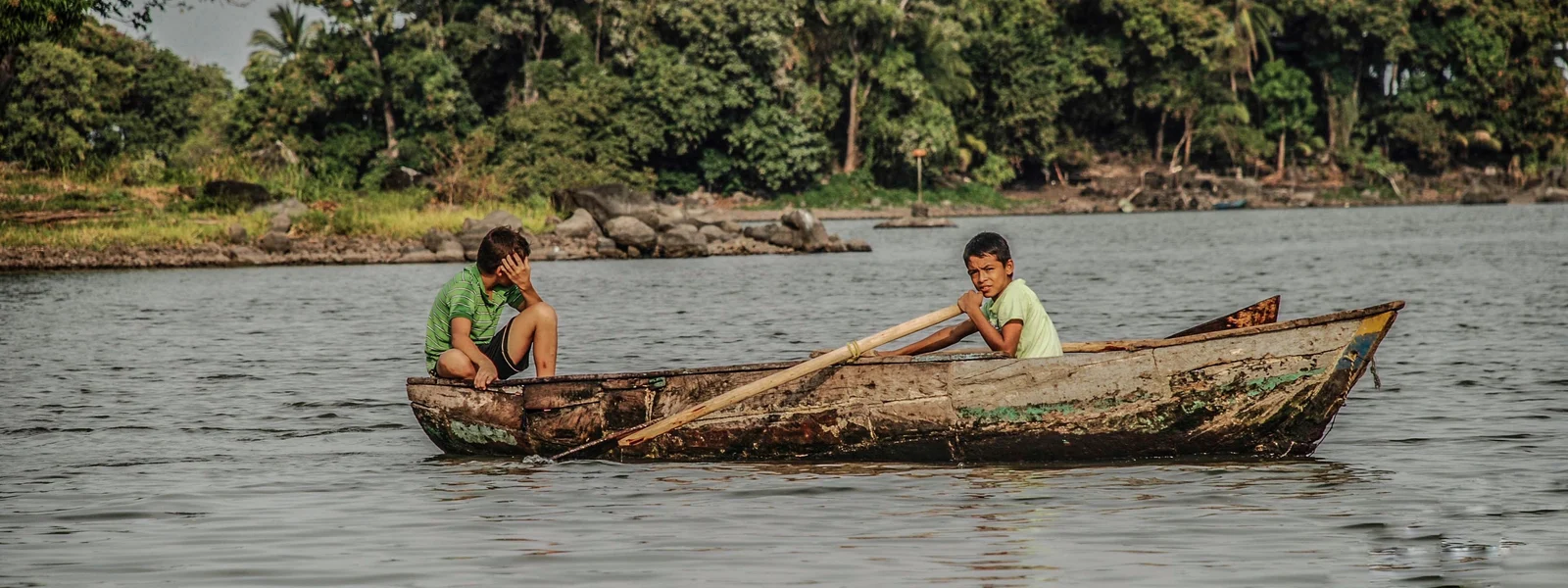
Ometepe & San Juan del Sur Guide
Two of Nicaragua's signature destinations sit close together in the south: Ometepe, the dramatic island of two volcanoes rising from Lake Nicaragua, reached by ferry, and San Juan del Sur, the lively Pacific surf town. They share a connectivity trait: the main towns are covered and the magic, the volcano hikes and the surf, is offline. This guide maps both, so you know where to expect signal and how to plan around the gaps.
On Ometepe the signal fades as you climb toward the volcanoes; at San Juan del Sur it is the hours in the surf that are offline. Both reward planning your connected tasks for the town.
Ometepe: coverage by area
Ometepe, the figure-eight island formed by two volcanoes in Lake Nicaragua, is reached by ferry from the mainland. Its main towns, Moyogalpa where the ferry arrives and Altagracia, and the developed areas have workable 4G coverage. As you head toward the volcanoes Concepcion and Maderas, or to the quieter, more rural parts of the island, the signal thins. The ferry crossing itself can be patchy. The practical approach is to handle your connected tasks in the main towns and treat the volcano hikes and remote corners as offline.
| Area | Coverage | What to expect |
|---|---|---|
| Moyogalpa & Altagracia | 4G | Workable in the main towns. Plan online tasks here. |
| Developed island areas | 4G, variable | Coverage in the more developed parts; patchier elsewhere. |
| Concepcion & Maderas volcanoes | Patchy to none | The volcano hikes lose signal on the climbs. |
| Quiet rural corners | Patchy | The remoter parts of the island thin out. |
| Ferry crossing | Variable | Signal comes and goes on the lake crossing. |
San Juan del Sur: the surf town
San Juan del Sur, the popular Pacific surf and party town, has good 4G coverage in the town itself. You are connected for booking surf lessons, messaging, navigation and posting. The nearby beaches reached by shuttle, the famous surf breaks up and down the coast, have more variable coverage, and the hours you spend in the water are offline by nature. As with the rest of Nicaragua, the town is your connected base and the surf is the offline time.
| Area | Coverage | What to expect |
|---|---|---|
| San Juan del Sur town | 4G | Good in town. Book surf and post here. |
| Nearby surf beaches | 4G to variable | Coverage varies at the beaches reached by shuttle. |
| Remote breaks & coast | Patchy | The more remote breaks can be patchier. |
| In the water | Offline | Your phone is safely on the beach while you surf. |
For both Ometepe and San Juan del Sur, do your connected tasks in the main town, Moyogalpa or Altagracia on the island, San Juan del Sur town on the coast, then treat the volcano hikes, the quiet island corners and the surf as offline. Before a volcano hike or a shuttle to a remote beach, download the offline map, screenshot tour details, and confirm pickups while you have signal. The gap between a connected town and an offline adventure can be a short hike or a shuttle ride.
Staying navigable in both
- Download offline maps in the main town. Save the island or coast area before volcano hikes or beach shuttles, since GPS works offline.
- Confirm ferries, shuttles and tours from town. Message operators while you have signal, since the volcano or remote beach may be a dead zone.
- Protect your phone for the surf and the ferry. A dry bag guards against water on the surf beaches and the lake crossing.
- Carry a power bank for volcano hikes. Ometepe's volcano climbs are long and offline, draining the battery while your phone is your camera.
Which network and how much data
For both areas, a multi-network eSIM is the safest choice, giving the best odds of signal in the developed island areas and around the coast, though the volcano hikes and the water are offline on any network. Data use is light, because so much time is spent in offline or low-signal areas, the volcanoes and the surf. A few days on Ometepe and in San Juan del Sur, folded into a wider Nicaragua trip, add little to your total, which is why a 5 GB plan often covers a whole itinerary including both.
Where we land
For Ometepe and San Juan del Sur, a multi-network eSIM handles the main towns well, with the volcano hikes, quiet island corners and surf treated as offline via downloaded maps and town-based planning. Coverage follows Nicaragua's familiar pattern: connected town, off-grid adventure. Our Nicaragua plans ride the strongest available network across both, which is what their mix of connected hubs and offline adventures calls for, with top-up if a longer stay needs it.
Plans for Nicaragua
FAQ
Is there mobile coverage on Ometepe island?
The main towns of Moyogalpa, where the ferry arrives, and Altagracia, along with the developed areas, have workable 4G coverage. As you head toward the volcanoes Concepcion and Maderas or the quieter rural corners, the signal thins, and the ferry crossing can be patchy. Plan your connected tasks in the main towns and treat the volcano hikes and remote parts as offline. A multi-network plan gives the best odds.
Does my phone work in San Juan del Sur?
Yes, San Juan del Sur town has good 4G coverage for booking surf lessons, messaging, navigation and posting. The nearby surf beaches reached by shuttle have more variable coverage, and the hours you spend in the water are offline by nature. The town is your connected base; the surf is the offline time. A dry bag protects your phone on the surf beaches.
Will my phone work hiking the Ometepe volcanoes?
Mostly no. The hikes up Ometepe's volcanoes Concepcion and Maderas lose signal on the climbs, which are long and offline. Download offline maps from the main town beforehand since GPS works offline, confirm your tour while you have signal, and carry a power bank since your phone is your camera and the climb drains the battery. Treat the volcano hike as a disconnected adventure.
Which network is best for Ometepe and San Juan del Sur?
A multi-network eSIM is the safest choice for both, giving the best odds of signal in the developed island areas and around the coast, though the volcano hikes and the water are offline on any network. The network helps you stay connected in the main towns and on the better-covered areas; offline preparation carries you through the volcano hikes and surf time.
How much data do Ometepe and San Juan del Sur use?
Little, because so much time is spent in offline or low-signal areas, the volcanoes and the surf. Your usage concentrates in the main towns for confirming ferries, shuttles and tours, navigation, messaging and some evening streaming on accommodation wifi. Folded into a wider Nicaragua trip, both add little to your total, so a 5 GB plan often covers an itinerary including them.